How can trend analysis boost creativity ?
Trend forecasting agency Future Snoops gave a masterclass at the latest Who’s Next session, rethinking the links between trends, creation and consumer behavior.
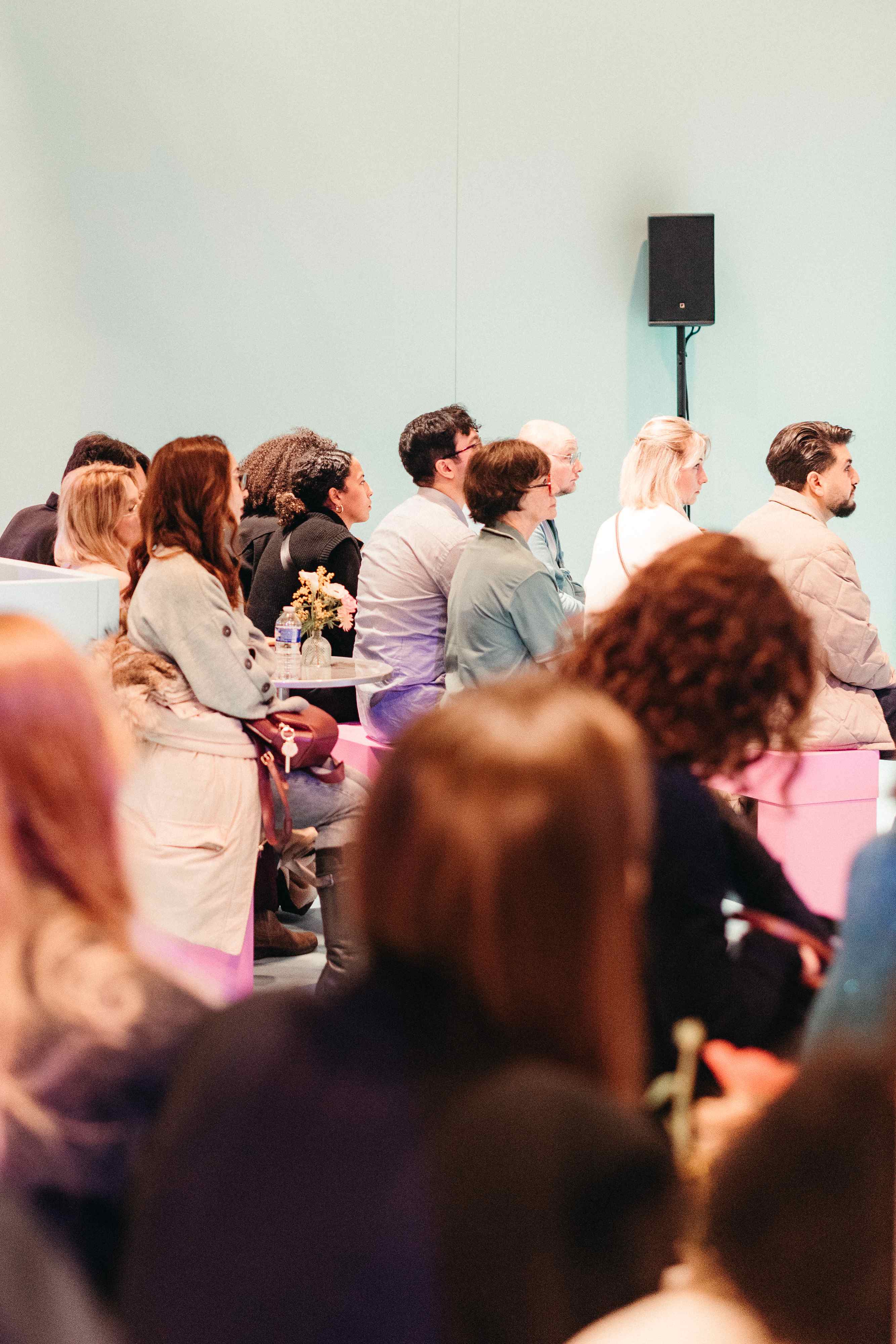
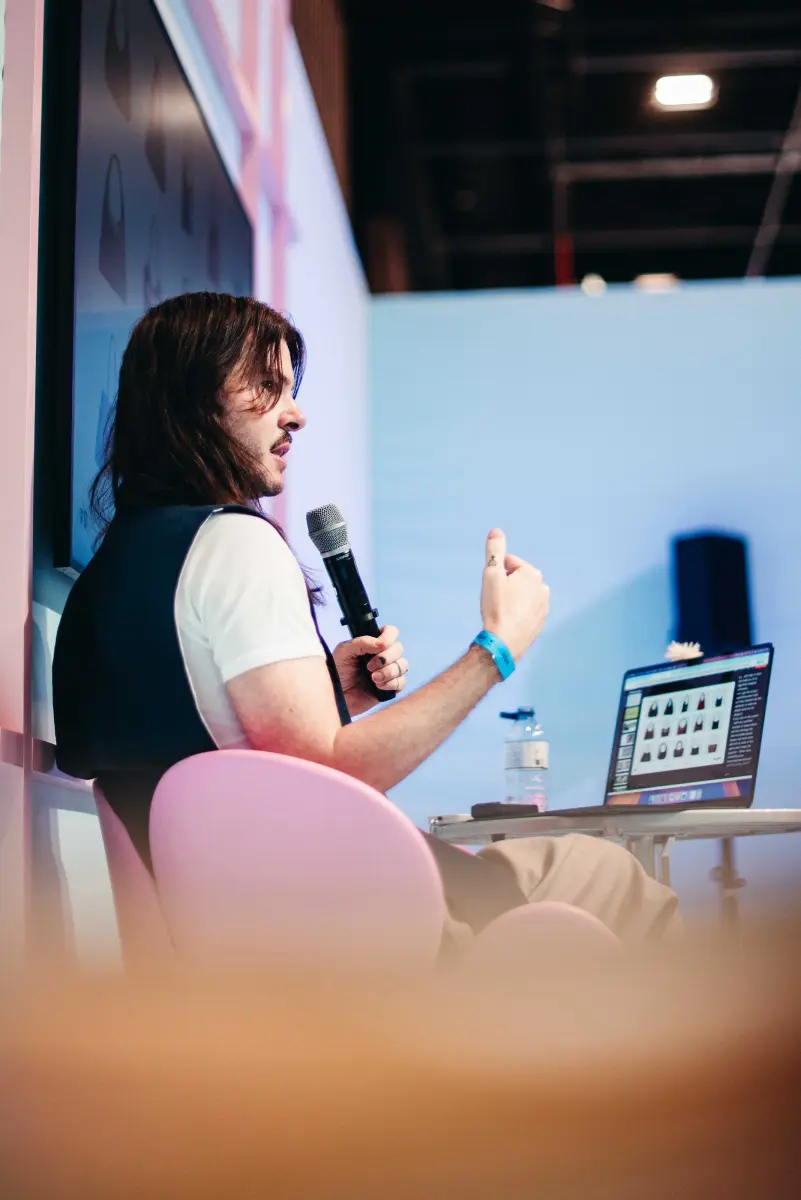
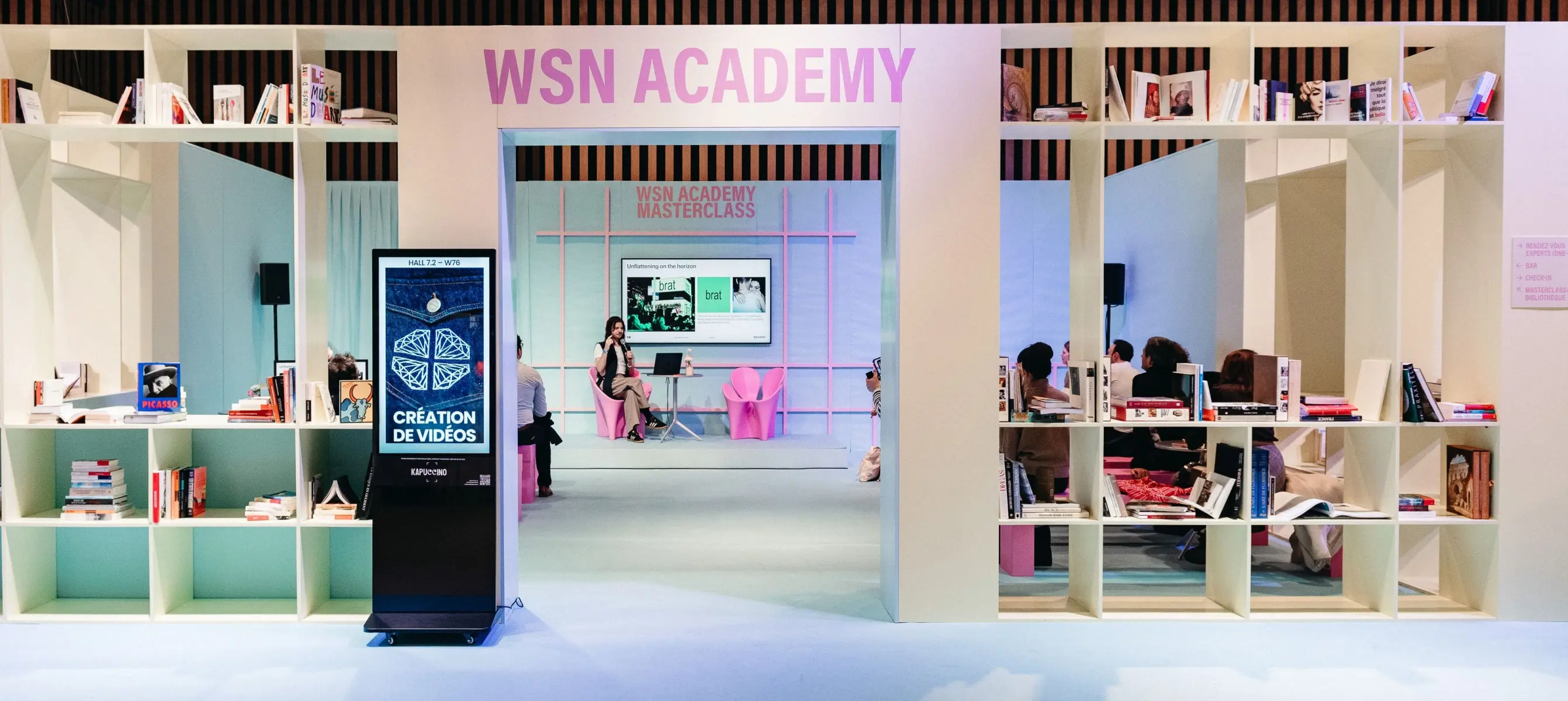
“Have you noticed that in design, everything starts to look the same? This insta-friendly blur of beige, archways and vertical tiles may be aesthetically pleasing, but it’s also so forgettable.” During a WSN Academy masterclass, Robbie Sinclair, VP of Fashion for trend forecasting agency Future Snoops, rang the alarm: we need to rethink the way we analyze trends.
According to him, we’re experiencing a creativity crisis, fed by the unprecedented uniformization of image and brand discourse. The ever-speeding cycle of trends is fueled by an endless race for image and engagement on social media, where a never-ending loop of identical references floods both our feeds and our imagination.
“We’ve optimized our way out into invisibility, we need to wake up and do something to backtrack” says Robbie Sinclair. Today, 73% of consumers say that brands all look the same, and the average attention span for brand content has dropped from 2.5 minutes to 8 seconds.
According to him, the solution lies in rethinking three key pillars: creativity, our understanding of consumers and the shopping experience.
Rooted creativity
“Data-driven decisions have created a cycle of mediocrity” says Robbie Sinclair. “What about the element of surprise?” According to him, our culture of novelty needs to go back to a founding principle: less analysis and more organic creation. He also argues that it is the intuition of creative minds that have long influenced consumers, not the other way round. Designers must become tastemakers again, rather than fueling a uniform and artificial taste driven by algorithms.
A new outlook on consumers
In this context, a whole new approach to consumer behavior is necessary, one that shifts our focus from purchase to emotions, impulse and, above all, the evolution of cultural contexts. “People thought Charli XCX’s Brat was new and exciting because this horrible Pantone shade and icky font made them feel uncomfortable. It says a lot about a desire for reality and authenticity that we have been craving for so long. Post-pandemic, we need to better tackle this resurgence of the 2000s gritty aesthetic, partying impulse and exaggeration of all sorts.”
Bring back the magic of shopping
“Lots of people think trend bursts, peaks and dies. In reality only some ingredients die out and new ones are introduced. We have to follow this pace to keep things moving forwards.” This means putting humans back at the center of the act of shopping. Rather than uniformizing store design and e-commerce experiences, it’s about reintroducing some narrative, along with emotion and symbolism, by rethinking retail as a space where culture and consumers can learn from one another.
A switch in perspective that could, in a near future, renew a meaningful dialogue between inspiring creation and a healthier consumption, freed from the pressures of algorithms.


