Craftsmanship is the future of luxury
Three key players in French savoir-faire gathered at a Premiere Classe X LE BOOK conference, to discuss the importance of craftsmanship for the future of luxury.
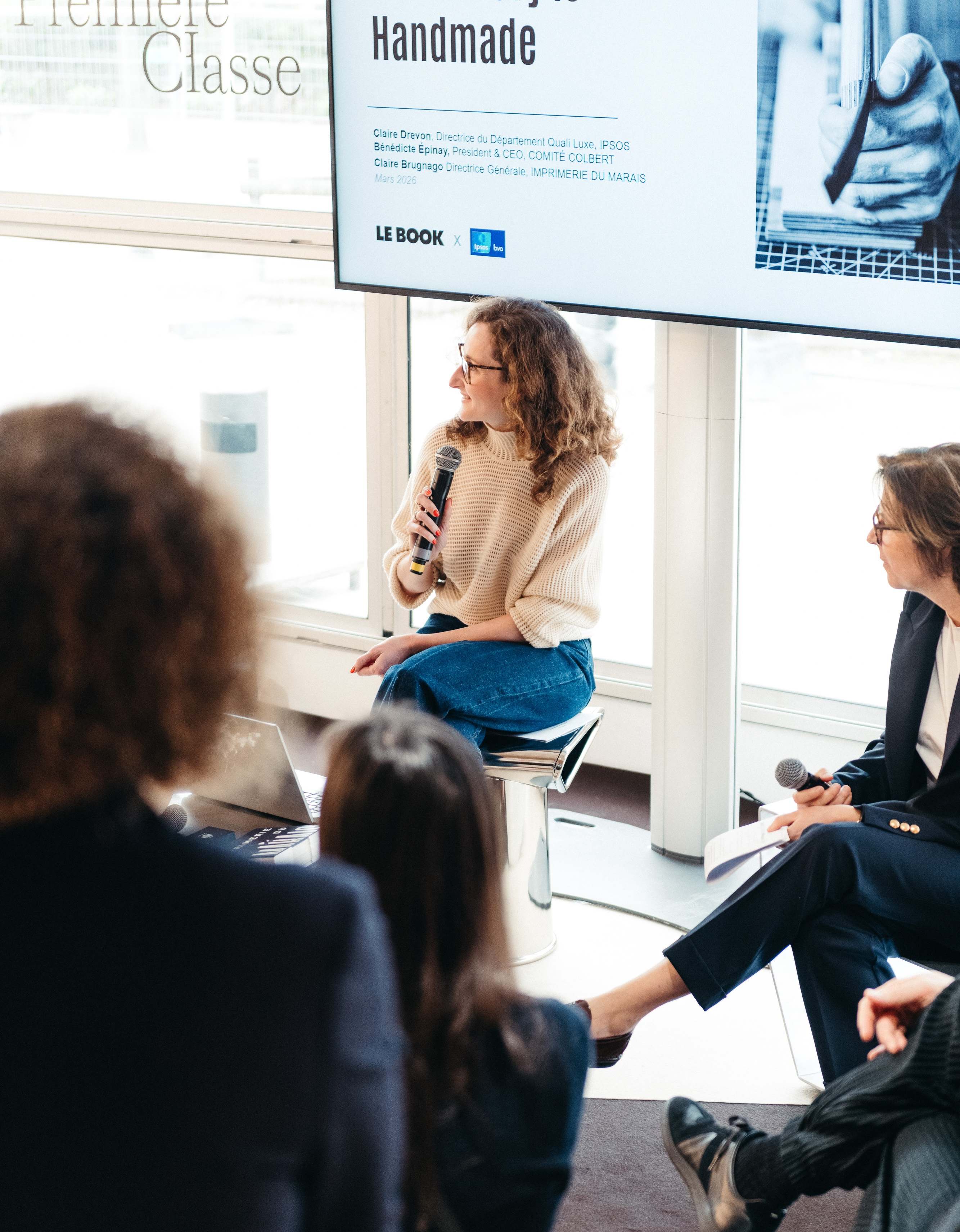
In 2025, the luxury sector experienced its first contraction since the health crisis, with a 2% decline. In France and in the United States, over 70% of its clients consider its prices too high compared to the quality of the products. “It’s a warning” says Claire Drevon, head of the Luxury and Beauty department at the French polling institute Ipsos. “We are in the midst of a confidence crisis. Luxury needs to regain its value.”
What drives a luxury purchase today?
According to the latest Ipsos polls, 82% of respondents are driven by quality and excellence, while 73% look for exclusivity. Cited by 79%, craftsmanship remains a cornerstone of the purchasing decision. “Exceptional craftsmanship transcends everything, it’s universal” says Claire Drevon. “It nurtures a brand’s heritage and narrative, including among young people. Contrary to what we might think, they are very interested in the stories behind the products.”
In the age of fast-fashion and planned obsolescence, a handmade product continues to represent excellence and authenticity, even more so when offering a glimpse of what happens behind the scenes.
Crafts need visibility
« Artisans are invisible because, for years, the industry considered that highlighting them would reveal their manufacturing secrets” says Bénédicte Épinay, CEO of the Comité Colbert, an organization that promotes French luxury.
But things are evolving, she says. In fashion as well as other sectors such as design or food, artisans have never been more visible. On TikTok, the #savoirfaire hashtag launched by the committee has already surpassed one billion views, enough to foster conversation about the need to make craftmanship more visible.
Innovation is a road to preservation
At the heart of Paris, the Imprimerie du Marais has been gathering, for 55 years, all the printing-related crafts, from foil stamping and screen printing to finishing and embossing. Its CEO Claire Brugnago says that passing on those skills guarantees their continuity, as long as they maintain an innovative approach.

“Innovating is in our DNA,” she says. “We push technology to its limits by printing on leather or metal and constantly improving embossing and stamping techniques, while offering eco-friendly solutions. We also keep a very strong network of designers and artisans.” Refusing to oppose technology and craftmanship has allowed the Imprimerie du Marais to constantly renew itself, and to develop an almost infinite range of techniques.
In our economy of fragmented attention, craftmanship thus offers depth and a sense of time, recreating a bond of trust and exchange between a brand and its customers.
What about tomorrow’s artisans in the age of artificial intelligence?
Bénédicte d’Épinay is confident. « We see countless young people wanting to learn métiers d’art, not to mention adults in search of a career change. AI is going to sweep away white-collar jobs, but it won’t replace the precision of an artisan’s touch.”


